
Material durability is a critical quality factor in packaging, paper products, and flexible materials. ASTM D689 is a recognized test method used to evaluate the tear resistance of paper and related sheet materials by measuring the force required to propagate an existing tear. The method is based on the Elmendorf tear principle, where a pendulum mechanism measures energy loss as a sample tear extends under controlled conditions.
For manufacturers producing paper bags, cartons, labels, wrapping papers, and industrial paper products, understanding tear resistance is essential for preventing material failure during converting, transportation, and end use. A reliable tear resistance test of paper bag materials helps engineers select suitable raw materials, optimize manufacturing processes, and maintain consistent product quality.
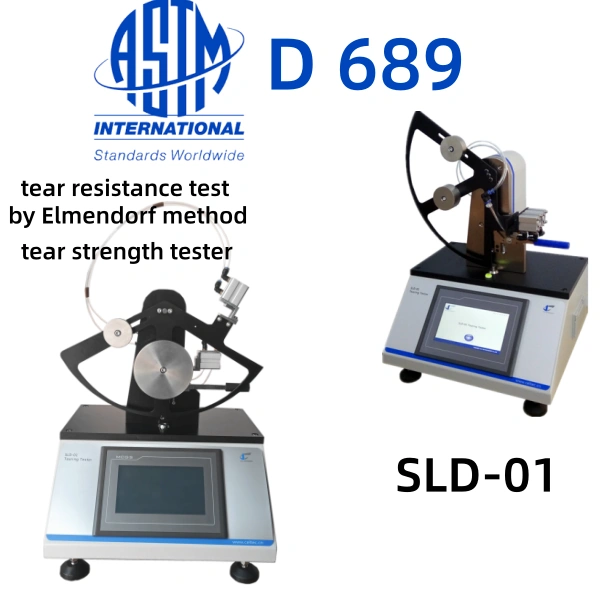
Modern laboratories use dedicated instruments such as the Cell Instruments SLD-01 Апарат за изпитване на разкъсване to perform accurate tear resistance measurements. By combining automatic operation, controlled pendulum release, and digital data analysis, advanced testing systems improve repeatability and support quality control requirements across multiple industries.
What Is ASTM D689 Tear Resistance Testing?
ASTM D689 describes a pendulum-type tear test method for determining the internal tearing resistance of paper and similar sheet materials. The test evaluates the ability of a specimen to resist the continuation of an existing cut when subjected to a tearing force.
Unlike tensile testing, which measures the force required to break a material completely, tear testing focuses on crack propagation behavior. A material may have sufficient tensile strength but still perform poorly against tearing if defects, cuts, or stress concentrations occur during use.
The ASTM D689 method is especially important for applications where paper products experience handling stress, including:
- Paper shopping bags
- Industrial sacks
- Packaging papers
- Wrapping materials
- Хартиени етикети
- Corrugated packaging components
- Specialty papers
The test provides quantitative tear resistance data that helps manufacturers compare materials, monitor production consistency, and improve packaging reliability.
Understanding the Elmendorf Tear Principle
Сайтът Elmendorf tear method was developed based on the principle introduced by Armin Elmendorf in the 1930s. It remains widely used because of its simple mechanical design and reliable measurement approach.
The basic principle involves a pendulum with a known energy capacity. A prepared specimen is clamped between two jaws, and a precut slit is created in the sample. When the pendulum is released, it tears the specimen through a defined distance.
During tearing:
- The pendulum loses potential energy.
- The energy loss corresponds to the work required to propagate the tear.
- The instrument converts this energy into a tear resistance value.
The result is commonly expressed as:
- mN (millinewtons)
- gf (gram-force)
- Tear index (for paper industry applications)
Higher tear resistance values indicate that the material requires more energy to continue tearing, generally representing better resistance to mechanical damage.
Why Perform a Tear Resistance Test of Paper Bag Materials?
Paper bags are exposed to various forces during filling, transportation, stacking, and consumer handling. Weak tear resistance can cause sudden failures even when the overall paper strength appears acceptable.
A tear resistance test of paper bag materials helps manufacturers evaluate:
Material Selection
Different paper grades have different fiber structures, basis weights, coatings, and manufacturing processes. Tear testing allows engineers to compare:
- Крафт хартия
- Recycled paper
- Хартия с покритие
- Multi-layer paper structures
and select materials suitable for specific applications.
Packaging Reliability
Paper bags must withstand:
- Weight loading
- Handling impacts
- Edge damage
- Folding stress
- Environmental changes
Tear resistance data provides an important indicator of packaging durability.
Process Optimization
Changes in:
- Fiber composition
- Refining degree
- Добавки
- Coating formulations
- Drying conditions
can significantly influence tear performance. Regular testing allows manufacturers to maintain stable production quality.
ASTM D689 Testing Principle and Procedure
A typical ASTM D689 tear resistance test includes several controlled steps.
1. Подготовка на пробата
The paper specimen is prepared according to the required dimensions. A standardized initial cut is introduced into the specimen to create a starting point for tear propagation.
Proper sample preparation is critical because variations in:
- Cutting accuracy
- Размери на пробата
- Conditioning conditions
can affect test results.
2. Specimen Clamping
The prepared specimen is mounted securely between the instrument clamps.
Uniform clamping pressure is important because uneven gripping can introduce testing errors.
3. Освобождаване на махалото
The pendulum is released from a controlled starting position. As it swings downward, it propagates the existing tear through the specimen.
Automatic release systems help eliminate operator influence and improve repeatability.
4. Energy Measurement
The tester measures the energy consumed during tearing. The energy loss is converted into a numerical tear resistance value.
5. Data Processing
Multiple specimens are normally tested to obtain statistically reliable results.
Modern testing equipment can automatically calculate:
- Average tear resistance
- Максимални и минимални стойности
- Стандартно отклонение
- Test pass/fail results
ASTM D689 Test Parameters and Result Interpretation
The accuracy of tear testing depends on controlling several important factors.
| Параметър на изпитването | Influence on Results |
|---|---|
| Sample conditioning | Affects moisture content and fiber behavior |
| Specimen dimensions | Ensures consistent tear propagation |
| Cutting quality | Determines starting tear accuracy |
| Pendulum capacity | Must match expected tear force range |
| Clamping pressure | Prevents specimen slipping |
| Testing environment | Reduces variability |
A higher tear resistance value usually indicates improved resistance to damage. However, acceptable values depend on the final application.
Например:
- Lightweight packaging paper may require moderate tear resistance for easy opening.
- Heavy-duty paper sacks require high tear resistance to withstand loading forces.
- Specialty papers may require balanced tear strength and tensile properties.
ASTM D689 Compared with Other Tear Testing Standards
Different industries use different tear resistance methods depending on material type and application.
| Стандартен | Основно приложение | Принцип на изпитването |
|---|---|---|
| ASTM D689 | Хартия и картон | Pendulum tear resistance |
| ASTM D1922 | Plastic films and thin sheets | Elmendorf tear propagation |
| ISO 6383-1 | Пластмасови фолиа | Trouser/Elmendorf-related tear methods |
| ASTM D1424 | Textile materials | Elmendorf tear testing |
| TAPPI tear methods | Pulp and paper industry | Paper tear resistance evaluation |
Although these standards share similar pendulum-based concepts, specimen preparation, calculation methods, and reporting requirements may differ.
Selecting the correct standard ensures that test results accurately represent real-world material performance.
Applications of Paper Tear Strength Testing
Професионалист paper tear strength tester is widely used in quality laboratories and manufacturing facilities.
Paper Packaging Industry
Приложенията включват:
- Grocery paper bags
- Cement bags
- Food packaging papers
- Shipping sacks
- Corrugated packaging materials
Manufacturers use tear data to ensure packages remain intact during transportation.
Опаковки за храни и напитки
Paper-based packaging often combines paper with coatings or barrier layers. Tear testing helps evaluate whether these structures maintain mechanical integrity.
Pharmaceutical and Medical Packaging
Paper components used in:
- Sterile packaging systems
- Медицински торбички
- Protective wraps
must maintain sufficient mechanical strength while supporting safe handling.
Printing and Label Materials
Labels and specialty papers require controlled tear properties to prevent premature damage during production and use.
Materials Suitable for ASTM D689 Tear Testing
ASTM D689-based tear evaluation can be applied to many paper-related materials, including:
- Крафт хартия
- Хартия с покритие
- Негланцирана хартия
- Картон
- Recycled paper
- Опаковъчна хартия
- Filter paper
- Specialty technical papers
The method provides valuable information for both raw material suppliers and finished product manufacturers.
Selecting a Professional Paper Tear Strength Tester
Надежден paper tear strength tester трябва да осигурява:
- Accurate pendulum energy measurement
- Стабилно закрепване на пробата
- Repeatable tear initiation
- Automatic result calculation
- Easy calibration verification
- Data recording capability
For laboratories testing different paper grades and flexible materials, flexibility in pendulum capacity is also important.
Cell Instruments SLD-01 Tear Tester for ASTM D689 Applications
The Cell Instruments SLD-01 Апарат за изпитване на разкъсване is designed for evaluating tear resistance of paper, films, textiles, and other flexible materials using the pendulum tear principle.
The instrument supports laboratory testing requirements through:
- PLC control and touchscreen operation for simple test setup
- Пневматично затягане на пробите for consistent holding force
- Автоматично освобождаване на махалото to minimize operator influence
- Calibration weight verification for maintaining measurement accuracy
- Automatic statistical calculation for efficient quality control
- Optional software for advanced reporting and data analysis
The SLD-01 supports multiple pendulum capacities:
| Капацитет на махалото | Application Range |
|---|---|
| 200 gf | Low tear resistance materials |
| 400 gf | Lightweight papers and films |
| 800 gf | General packaging materials |
| 1600 gf | Medium-strength materials |
| 3200 gf | Strong paper products |
| 6400 gf | Heavy-duty applications |
By providing repeatable tear resistance measurements, the SLD-01 helps laboratories identify weak materials, optimize packaging designs, and improve manufacturing consistency.
Benefits of Implementing Tear Resistance Testing in Quality Control
Regular tear testing provides several advantages:
Reduce Material Failures
Early identification of weak paper materials helps prevent packaging damage during transportation and handling.
Improve Product Consistency
Routine testing detects variations caused by:
- Raw material changes
- Production adjustments
- Environmental conditions
Support Material Development
Engineers can compare different formulations and structures to achieve the desired balance between strength, flexibility, and cost.
Meet Customer and Industry Requirements
Reliable tear resistance data supports supplier qualification, internal quality systems, and compliance documentation.