
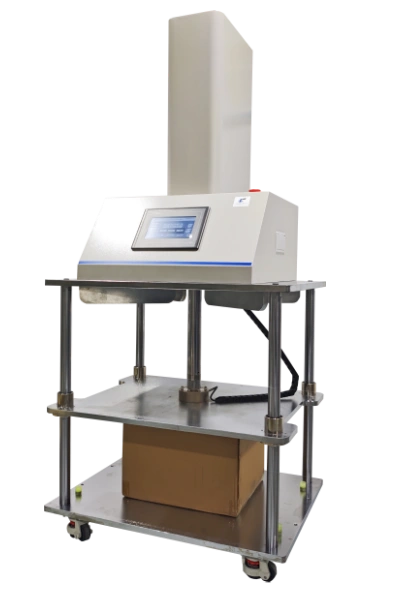
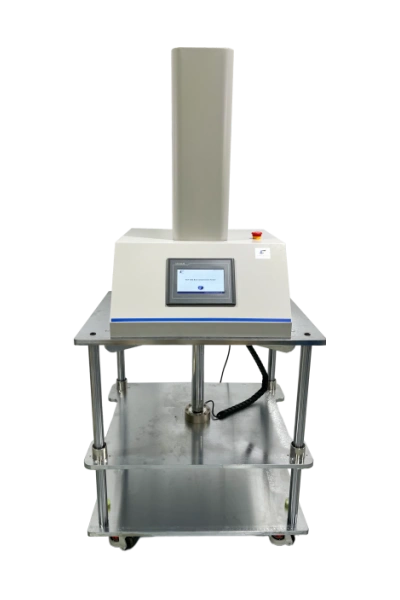
Packaging performance plays a critical role in protecting products throughout transportation, warehousing, and distribution. A kompressionstester til kasser is an essential laboratory instrument used to evaluate the compressive strength, stacking resistance, and structural stability of packaging containers under controlled loading conditions. By simulating real-world forces that occur during storage and shipping, the BCT-600 Box Compression Tester helps manufacturers optimize packaging designs, reduce product damage, and ensure compliance with international testing requirements.
For industries using corrugated cartons, fiberboard boxes, plastic containers, wooden crates, and composite packaging, accurate box compression resistance testing provides valuable data for material selection, packaging validation, and quality control. The BCT-600 applies controlled compression forces while measuring load and deformation, allowing engineers to understand how packaging performs under crush loads, stacking pressure, and long-term compression conditions.
What Is a Box Compression Tester?
A kompressionstester til kasser is a precision testing system designed to measure the ability of packaging containers to withstand vertical compression forces. During transportation and warehouse storage, packages are often exposed to stacking loads, external pressure, and mechanical handling forces. Insufficient compression strength can lead to carton collapse, product damage, and increased logistics costs.
The BCT-600 evaluates packaging durability by compressing a test sample between two rigid platens while continuously recording:
- Compression force (N, lbf, kgf)
- Deformation displacement (mm)
- Peak compression strength
- Load–deformation relationship
- Failure point or structural stability
This data enables packaging engineers to determine whether a container can maintain its integrity throughout its expected service conditions.
Unlike simple load measurement devices, a modern box compression tester provides dynamic analysis capabilities, allowing users to study packaging behavior from initial loading to failure or long-term deformation.
Why Is Box Compression Resistance Testing Important?
Packaging failures often occur because the container cannot withstand external compression forces during distribution. A carton may appear strong during normal handling but fail when stacked in warehouses, transported by trucks, or exposed to vibration and temperature changes.
Professional carton containers compression testing helps companies:
Prevent Packaging Collapse
Compression testing identifies the maximum load a package can withstand before buckling or structural failure. This information helps prevent carton deformation and product damage.
Optimize Packaging Design
Engineers can compare different materials, board grades, wall thicknesses, and structural designs to achieve the best balance between protection and material cost.
Improve Logistics Efficiency
Understanding compression performance allows companies to maximize stacking height and transportation efficiency while maintaining package safety.
Support Quality Control Programs
Manufacturers can establish acceptance criteria and monitor production consistency by testing packaging samples from different production batches.
Meet Global Packaging Standards
Many industries require compression testing according to internationally recognized standards, including ISO and ASTM methods.
How Does a Box Compression Tester Work?
The testing principle is based on applying a controlled compressive load to a packaging sample until a specified condition is reached.
The test sample is positioned between upper and lower compression plates. The upper platen moves downward at a controlled speed while the load cell measures the applied force. The system records force and displacement data throughout the process.
A typical compression testing process includes:
| Testing Step | Beskrivelse |
|---|---|
| Prøveforberedelse | The carton or container is conditioned and positioned between compression plates |
| Compression Loading | The upper platen applies a controlled downward force |
| Indsamling af data | Force and deformation values are continuously recorded |
| Resultatanalyse | Maximum strength, deformation behavior, or creep performance is evaluated |
| Report Generation | Test results are stored or exported for quality documentation |
The BCT-600 uses a high-precision load measurement system and servo-controlled movement to provide stable compression performance and repeatable results.
Comprehensive Compression Test Modes for Packaging Evaluation
Different packaging applications require different evaluation methods. The BCT-600 provides multiple testing modes to simulate various real-world conditions.
Crush Test
A crush test measures the maximum compression force a package can withstand before collapse or significant deformation.
Formål
The test determines the ultimate compressive strength of a carton or container.
Key Results
- Maximum compression force
- Deformation at peak load
- Failure point
Practical Applications
Crush testing helps evaluate whether packaging can survive:
- Forklift handling
- Conveyor transportation
- Stacking operations
- Mechanical loading during distribution
This test is widely used for corrugated boxes and shipping containers.
Stacking Test (Constant Load Compression Test)
A stacking test simulates warehouse storage conditions where packages support continuous weight from other stacked units.
Instead of increasing force until failure, the tester applies a predetermined load for a specific period.
Formål
The test evaluates long-term compression stability and resistance to creep deformation.
Key Results
- Deformation over time
- Time to failure
- Load retention capability
Benefits
Stacking tests help manufacturers understand packaging performance during:
- Long-term warehouse storage
- Pallet stacking
- Ocean transportation
- High-volume distribution
Fixed-Deformation Test
A fixed-deformation test compresses a package to a defined displacement value and measures the required force.
Formål
This method evaluates stiffness and load-bearing behavior at controlled deformation levels.
Applications
It helps engineers:
- Establish packaging design limits
- Compare different carton structures
- Determine acceptable deformation ranges
Fixed-Load (Creep) Test
A fixed-load test applies a constant compression force and monitors deformation changes over time.
Formål
The test measures how packaging materials respond to continuous pressure.
Key Data
- Deformation versus time curve
- Permanent deformation behavior
- Long-term structural stability
This method is particularly useful for packaging exposed to extended storage conditions.
BCT-600 Box Compression Tester Features and Benefits
The BCT-600 is designed for laboratories, packaging manufacturers, and quality control departments requiring accurate and efficient compression testing.
Multiple Testing Modes in One System
The instrument supports:
- Strength compression testing
- Fixed-value testing
- Stacking simulation testing
This allows users to evaluate packaging performance under different loading conditions without requiring multiple instruments.
7-Inch Touchscreen HMI Operation
The intuitive touchscreen interface provides:
- Guided test workflows
- Test program selection
- Real-time force and deformation curves
- Automatisk beregning af resultater
Servo-Controlled Compression System
The servo cylinder provides smooth and accurate platen movement, reducing vibration and improving repeatability during testing.
High-Rigidity Mechanical Structure
The four-column guided frame with low-friction linear bearings ensures:
- Stable platen alignment
- Reduced mechanical error
- Reliable long-term operation
Precision Load Measurement
The load cell positioned above the upper platen accurately detects compression forces and failure points.
Automatic Data Processing
The system provides:
- Real-time curve display
- Automatic test calculation
- Datalagring
- Optional PC software reporting
Enhanced Safety Design
Safety features include:
- Emergency stop function
- Mechanical travel limits
- Sensor protection systems
Technical Specifications of BCT-600
| Parameter | Specifikation |
|---|---|
| Testrum | 600 × 600 × 600 mm (customizable) |
| Testområde | 0.25 kN, 0.5 kN, 1 kN, 2 kN, 5 kN, 10 kN and customized |
| Beslutning | 0,01 N |
| Deformation Error | ≤1 mm |
| Plate Parallelism | ≤1 mm |
| Load Cell Accuracy | ±1% |
| Compression Speed | 10 ± 3 mm/min |
| Stacking Speed | 5 ± 1 mm/min |
| Return Speed | 100 mm/min |
| Units | N / lbf / kgf |
| Display System | 7-inch touchscreen with curve analysis |
| Printing | Integrated micro-printer |
| Communication | Optional RS232 and software |
| Strømforsyning | 110–220 V vekselstrøm, 50/60 Hz |
Applicable Materials and Packaging Applications
A professional box compression tester supports testing across multiple packaging materials.
| Materiale | Typiske anvendelsesområder |
|---|---|
| Corrugated cardboard | Shipping cartons, e-commerce packaging |
| Fiberboard | Food and consumer goods packaging |
| Plastic containers | Chemical and pharmaceutical containers |
| Wooden crates | Heavy industrial packaging |
| Composite packaging | Specialized transport containers |
The BCT-600 is widely used by:
- Packaging manufacturers
- Food companies
- Pharmaceutical companies
- Logistics providers
- Uafhængige testlaboratorier
- Forskningsinstitutioner
Related Packaging Compression Testing Standards
Packaging compression performance is evaluated according to several international standards.
| Standard | Ansøgning |
|---|---|
| ISO 12048 | Compression testing of complete filled transport packages |
| ASTM D642 | Determining compressive resistance of shipping containers |
| ISO 2234 | Stacking tests using static loads |
| ASTM D4169 | Performance testing of shipping containers and systems |
| TAPPI T804 | Compression testing of fiberboard shipping containers |
| JIS Z0212 | Compression testing methods for packaging containers |
| GB/T 4857.3 | Static load testing for transport packages |
| GB/T 4857.4 | Pressure testing methods for packaging |
| QB/T 1047 | Paper and carton packaging testing |
Among these standards, ISO 12048, ASTM D642, og ISO 2234 are commonly referenced for evaluating packaging compression performance.
Improve Packaging Reliability with Professional Compression Testing
Reliable packaging performance requires accurate measurement of structural strength and long-term durability. A kompressionstester til kasser provides essential data for packaging engineers to improve designs, reduce material waste, and prevent failures during distribution.
The BCT-600 combines precise force measurement, flexible testing modes, and compliance with international standards to support modern packaging quality control. Whether performing carton containers compression testing, stacking evaluation, or packaging development research, it provides the performance data required for confident packaging decisions.
Konklusion
Accurate compression testing helps packaging manufacturers understand product protection capability and improve supply chain reliability. Cell Instruments provides advanced compression testing solutions for carton evaluation, packaging development, and laboratory quality control. With flexible test modes, customized fixtures, and professional technical support, our equipment helps engineers meet different testing requirements and industry standards. Contact us to learn more about suitable packaging compression testing solutions for your application.


