
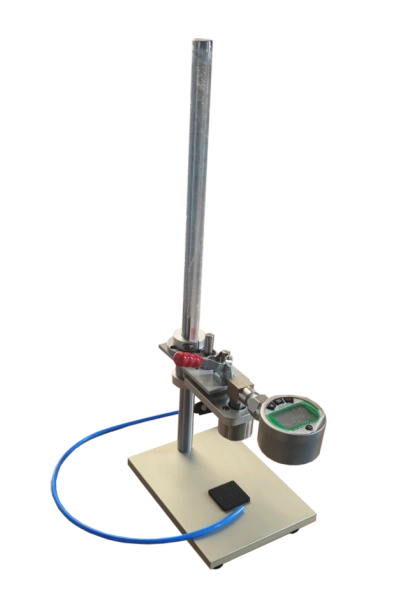
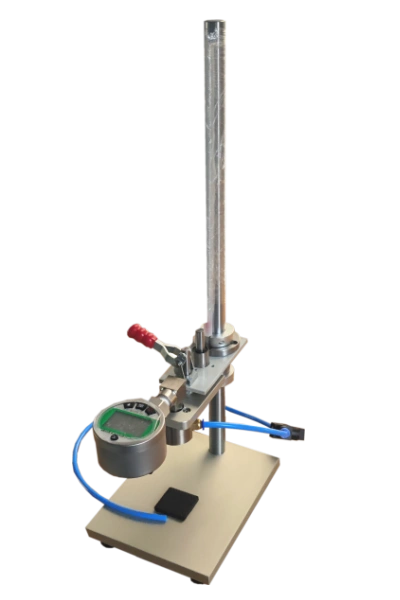
Den Manual Carbonation Tester provides a reliable and cost-effective solution for measuring dissolved carbon dioxide levels in beverage containers. Designed for quality control laboratories, beverage manufacturers, and R&D facilities, this tester determines carbonation levels by measuring internal pressure and beverage temperature after sample preparation. By following a standard carbonation test method based on pressure-temperature relationships, the instrument helps engineers evaluate carbonation consistency, detect CO₂ loss, and maintain beverage quality.
Carbonation plays a critical role in beverage taste, mouthfeel, shelf stability, and consumer acceptance. Whether testing carbonated soft drinks, beer, sparkling water, energy drinks, or fermented beverages, accurate CO₂ measurement allows manufacturers to control filling processes, optimize formulations, and ensure product performance throughout the supply chain. The CLRT-02 Manual Carbonation Tester combines simple operation with precise measurement capability, making it suitable for laboratories requiring dependable carbon dioxide loss testing for beverage container applications.
What Is a Manual Carbonation Tester?
A Manual Carbonation Tester is a laboratory instrument used to determine the amount of dissolved CO₂ in carbonated beverages by measuring container pressure and sample temperature. Unlike fully automated carbonation analyzers, manual carbonation testers provide a straightforward testing workflow that allows operators to perform accurate measurements with minimal complexity.
The testing principle is based on the relationship between dissolved carbon dioxide, temperature, and pressure inside a sealed beverage container. When a beverage reaches equilibrium after agitation, the measured pressure value can be compared with carbonation reference tables to calculate the CO₂ volume.
The CLRT-02 Manual Carbonation Tester is designed for applications where reliable carbonation measurement is required without the cost and maintenance requirements of automated systems.
Why Carbonation Testing Is Important for Beverage Quality Control
Carbon dioxide directly influences beverage characteristics, including:
- Taste and sensory experience: Proper carbonation creates the desired refreshing sensation and flavor balance.
- Product consistency: Maintaining stable CO₂ levels ensures every production batch meets specifications.
- Packaging performance: Excessive internal pressure can affect container integrity, while insufficient carbonation may reduce product quality.
- Shelf-life evaluation: Monitoring CO₂ retention helps identify carbonation loss during storage and transportation.
- Production optimization: Testing data supports filling adjustments, formulation improvements, and process control.
For beverage manufacturers, carbonation testing is not only a quality inspection step but also an important tool for maintaining brand reputation and customer satisfaction.
ASTM F1115 Carbonation Test Method and CO₂ Loss Evaluation
Den ASTM F1115 standard test method provides guidance for determining CO₂ loss from beverage containers. It focuses on evaluating the change in carbonation level caused by factors such as container design, sealing performance, storage conditions, and transportation.
The CLRT-02 supports testing procedures related to ASTM F1115 by allowing operators to measure:
| Parameter | Syfte |
|---|---|
| Internal container pressure | Determines carbonation pressure after stabilization |
| Beverage temperature | Provides reference conditions for CO₂ calculation |
| CO₂ volume | Evaluates carbonation level and potential CO₂ loss |
Although carbonation performance depends on multiple factors, pressure and temperature measurement provide essential data for understanding beverage carbonation behavior.
Testing Principle of Manual Carbonation Measurement
The working principle of a Manual Carbonation Tester involves three key factors:
1. Pressure measurement
The sealed beverage container is pierced, allowing the tester to measure internal gas pressure.
2. Temperature measurement
The beverage temperature is recorded because CO₂ solubility changes with temperature.
3. Carbonation calculation
The measured pressure and temperature values are compared with carbonation tables to determine dissolved CO₂ volume.
This method provides a practical approach for laboratories that need repeatable carbonation testing without complicated instrumentation.
How to Perform a Manual Carbonation Test
The CLRT-02 follows a simple six-step testing workflow:
1. Pierce the Beverage Container
The operator uses the hardened quenching piercing head to penetrate the bottle or container cap. The durable design ensures reliable puncturing while minimizing leakage.
2. Release Excess Pressure
The vent valve is opened to safely release unstable gas pressure from the container.
3. Stabilize the Sample
After pressure release, the valve is closed to isolate the sample and prepare it for measurement.
4. Agitate the Beverage
The container is manually shaken for approximately 40 seconds. This step allows dissolved CO₂ to reach equilibrium between the liquid and gas phases.
5. Measure Pressure and Temperature
The stabilized pressure is recorded from the precision gauge, while the beverage temperature is measured for carbonation calculation.
6. Calculate CO₂ Volume
The recorded pressure and temperature values are compared with carbonation reference tables to determine the final carbonation level.
This manual workflow provides laboratory users with direct control over each testing stage and improves understanding of carbonation behavior.
Key Features of CLRT-02 Manual Carbonation Tester
The CLRT-02 is designed for beverage laboratories requiring accurate and practical carbonation measurement.
High-Precision Pressure Measurement
The instrument uses a pressure gauge with:
- Measurement range: 0–1 MPa
- Resolution: 0.0001 MPa
- Multiple units: MPa, psi, bar
The high-resolution display helps operators obtain repeatable pressure readings for carbonation evaluation.
Durable Quenching Piercing Head
The hardened piercing head provides:
- Reliable bottle penetration
- Long service life
- Reduced leakage during testing
This design improves operational stability during frequent laboratory testing.
Anti-Leak Structure
The sealed valve and gasket assembly minimize sample loss and maintain measurement accuracy during testing.
Flexible Sample Compatibility
The adjustable sample height supports beverage containers up to 350 mm, with optional extensions available for different container sizes.
Simple Manual Operation
The manual workflow reduces equipment complexity while providing reliable carbonation data for daily quality control applications.
Applications of Carbonation Testing Equipment
A Manual Carbonation Tester is widely used across beverage-related industries.
Beverage Production Quality Control
Manufacturers use carbonation testing equipment to verify CO₂ levels after filling and packaging processes.
Typiska användningsområden är bland annat:
- Soft drink production
- Beer quality inspection
- Sparkling water testing
- Energy drink evaluation
- Fermented beverage analysis
Research and Development
R&D teams use carbonation measurement during:
- Formula development
- Packaging selection
- Shelf-life studies
- Processoptimering
Laboratory Testing Services
Independent laboratories and educational institutions can use manual carbonation testers for beverage analysis and teaching applications.
Applicable Beverage Materials and Containers
The CLRT-02 Manual Carbonation Tester is suitable for various carbonated beverage samples, including:
| Material / Sample | Syfte med testningen |
|---|---|
| Carbonated soft drinks | Verify carbonation consistency |
| Beer | Evaluate dissolved CO₂ content |
| Sparkling water | Measure carbonation level |
| Energy drinks | Control carbonation specifications |
| Fermented beverages | Analyze CO₂ retention |
It can be used with different bottle formats, including glass bottles, PET bottles, and other sealed beverage containers.
Manual vs Automated Carbonation Testing Equipment
| Funktion | Manual Carbonation Tester | Automated Carbonation Analyzer |
|---|---|---|
| Drift | Manual workflow | Automated measurement |
| Cost | Lower investment | Higher investment |
| Maintenance | Simple maintenance | More complex |
| Ansökan | QA labs, R&D, small production | High-throughput production |
| Flexibility | Operator-controlled testing | Automated data processing |
For laboratories that require dependable carbonation measurement with practical operation, manual systems provide an effective balance between performance and cost.
Related Standards for Carbonation Testing
The main standards related to carbonation measurement include:
- ASTM F1115 – Standard Test Method for Determining the CO₂ Loss of Beverage Containers
- GB/T 10792 – Chinese Standard for Carbonated Beverages
These standards provide reference methods for evaluating carbonation characteristics and beverage container performance.
Why Choose CLRT-02 for Beverage CO₂ Testing?
The CLRT-02 Manual Carbonation Tester combines accuracy, durability, and operational simplicity for professional beverage testing applications. Its precision pressure measurement system, robust piercing structure, and manual testing workflow make it suitable for laboratories requiring reliable carbonation analysis.
For beverage manufacturers, quality inspection organizations, and research laboratories, the instrument provides valuable data for controlling carbonation quality, evaluating packaging performance, and improving production consistency.
Slutsats
Accurate carbonation measurement helps beverage manufacturers maintain product quality, optimize production processes, and evaluate CO₂ retention performance. Cell Instruments provides reliable carbonation testing equipment designed for beverage laboratories, R&D centers, and quality control departments. Explore the CLRT-02 Manual Carbonation Tester and customized testing solutions to improve carbonation analysis efficiency and ensure consistent beverage performance.


