
Textile products are exposed to stretching, snagging, abrasion, and accidental damage throughout their service life. A fabric that performs well under normal tensile loading may still fail when a small cut or defect develops and begins to propagate. This is why iso 13937-1 is widely used as an important test method for evaluating the tear behavior of textile materials.
The standard focuses on determining the tear force of textile fabrics using the pendulum (Elmendorf) method. Unlike tensile strength tests that measure resistance against complete separation under uniform pulling, tear testing evaluates how effectively a material resists the growth of an existing slit or notch.
For manufacturers, laboratories, and quality control departments, understanding iso 13937-1 helps optimize fabric structures, improve product durability, and verify that finished textiles meet performance expectations.
The measurement obtained through this method provides valuable information about fabric integrity, particularly for applications where localized damage can rapidly develop into a larger failure.
Why Tear Strength Testing Matters for Textile Quality Control
Tear strength is a critical mechanical property because real-world damage rarely begins with a perfectly distributed load. Clothing, industrial fabrics, protective textiles, and technical materials often experience concentrated forces at specific points.
A fabric with insufficient tear resistance may fail due to:
- A small cut caused during handling
- Sharp edges during transportation
- Mechanical stress during repeated use
- Snagging from external objects
- Weak points caused by weaving or finishing processes
The purpose of iso 13937-1 testing is not only to generate a numerical tear force value but also to help engineers understand material behavior.
Tear resistance data can support decisions related to:
- Fiber selection
- Yarn density optimization
- Weave or knit structure adjustment
- Coating and finishing process improvement
- Supplier material verification
- Product durability evaluation
For example, a manufacturer producing outdoor clothing may compare different fabric constructions to determine which material provides better resistance against accidental tearing during field use.
Principle of the ISO 13937-1 Elmendorf Tear Resistance Test
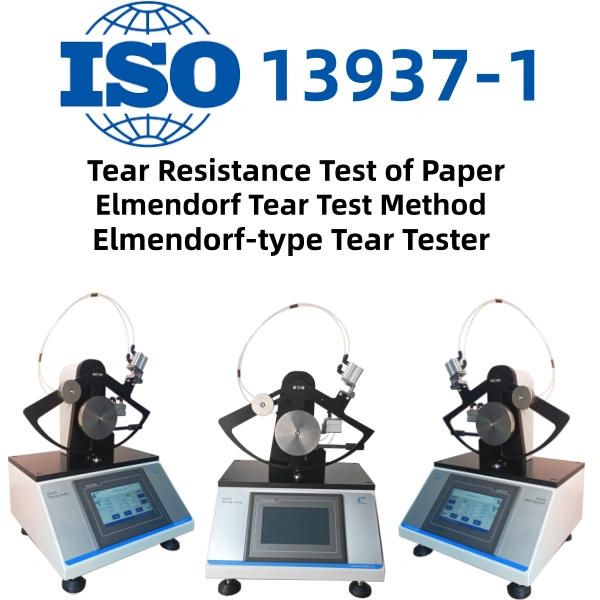
The testing principle of iso 13937-1 is based on the Elmendorf pendulum method.
During the test, a prepared specimen containing a starting slit is clamped vertically. A pendulum with a known energy capacity is released, and the stored energy of the pendulum continues the tear through the specimen.
The instrument measures the energy consumed during tearing. This energy loss is converted into the average force required to propagate the tear.
The basic testing concept includes:
- Specimen preparation: A textile specimen is cut to the required dimensions, and a controlled slit is introduced to create a defined starting point.
- Clamping of the sample: The specimen is securely fixed between two grips to maintain consistent positioning.
- Pendulum release: The pendulum swings through the specimen, extending the existing tear.
- Energy measurement: The instrument calculates the energy consumed during tear propagation.
- Result calculation: The tear force is displayed as the measured resistance of the textile material.
This method provides repeatable results because the tearing energy comes from a controlled pendulum movement rather than manual pulling force.
ISO 13937-1 Test Procedure Overview
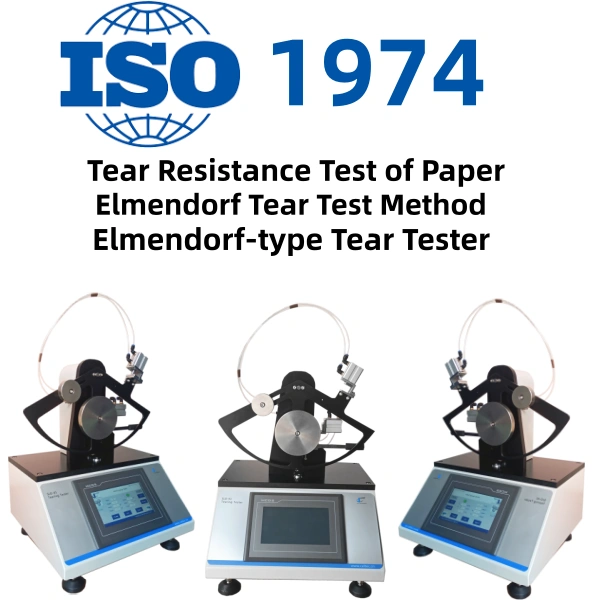
Although laboratory procedures should always follow the current version of the standard and applicable laboratory practices, the general workflow includes several important stages.
Sample Conditioning
Textile materials are typically conditioned under controlled atmospheric conditions before testing. Conditioning reduces the influence of environmental factors such as humidity and temperature.
This step is particularly important for:
- Natural fibers
- Moisture-sensitive textiles
- Coated fabrics
- Technical fabrics used in different climates
Vorbereitung der Probe
The test sample must be prepared carefully because inaccurate cutting can affect the tear path.
Zu den wichtigen Aspekten gehören:
- Correct specimen dimensions
- Proper orientation of warp and weft directions
- Consistent slit creation
- Avoiding damaged edges before testing
Fabric direction is especially important because woven structures often show different tear resistance values depending on yarn arrangement.
Performing the Pendulum Test
After the sample is installed:
- The pendulum is positioned at the starting point.
- The release mechanism allows controlled movement.
- Der Riss breitet sich durch das Prüfstück aus.
- The instrument records the energy loss.
Multiple specimens are generally tested to obtain statistically reliable results.
Data Analysis
The final result is usually reported as tear force.
Laboratories may evaluate:
- Durchschnittliche Reißfestigkeit
- Individual specimen results
- Directional differences
- Materialkonsistenz
A significant difference between machine direction and cross direction results may indicate differences in fabric structure or manufacturing conditions.
Applications of ISO 13937-1 Tear Testing in Different Industries
The application of iso 13937-1 extends beyond traditional clothing textiles. Many industries rely on tear resistance testing to ensure reliability.
| Industry | Testing Purpose | Typical Materials |
|---|---|---|
| Apparel | Evaluate durability during wear | Woven fabrics, knitted fabrics |
| Outdoor equipment | Verify resistance against environmental damage | Tent fabrics, backpacks, coated textiles |
| Automotive textiles | Ensure long-term mechanical reliability | Seat fabrics, interior textiles |
| Medical textiles | Confirm durability of textile-based products | Surgical fabrics, protective materials |
| Industrial textiles | Assess resistance under demanding conditions | Conveyor fabrics, filter materials |
| Technical textiles | Optimize high-performance structures | Composite fabrics, coated substrates |
In addition to textile applications, tear testing concepts are also relevant to packaging and paper industries. For example, tear strength of paper is an important quality parameter for paper bags, labels, packaging sheets, and industrial papers.
While textile testing follows textile-specific procedures, paper products may require a dedicated paper Elmendorf tear testing machine configured for paper and board materials.
Difference Between ISO 13937-1 and Other Tear Testing Methods
Different industries use different tear test standards because material structures and application requirements vary.
| Standard | Hauptanwendung | Prüfverfahren |
|---|---|---|
| ISO 13937-1 | Textilgewebe | Pendulum Elmendorf method |
| ISO 6383-1 | Kunststofffolien und -platten | Trouser tear method |
| ASTM D1922 | Kunststofffolien | Propagation tear resistance |
| ASTM D1424 | Textilgewebe | Elmendorf tear method |
| TAPPI T414 | Paper materials | Internal tear resistance |
The main difference is not only the instrument type but also the specimen geometry, calculation method, and material behavior being evaluated.
For laboratories handling multiple materials, selecting equipment with flexible pendulum capacities and suitable accessories can improve testing efficiency.
Selecting the Right Equipment for ISO 13937-1 Testing
A reliable tear test requires more than simply applying a force. Instrument design directly affects repeatability, operator consistency, and data reliability.
Key equipment considerations include:
Pendulum Capacity Selection
Different materials require different measuring ranges.
Lightweight fabrics may require lower capacity pendulums, while heavy industrial textiles need higher energy ranges.
Sample Clamping Stability
Uneven clamping pressure can influence tear propagation. A stable clamping system helps maintain consistent results between tests.
Automatische Pendelauslösung
Manual release can introduce operator variation. Automated release mechanisms improve repeatability by ensuring consistent starting conditions.
Data Recording Capability
Modern laboratories often require:
- Automatic calculations
- Digital result storage
- Statistische Auswertung
- Traceable test records
These functions support quality management systems and production improvement programs.
SLD-01 Paper Elmendorf Tear Testing Machine
For laboratories performing Elmendorf-based tear resistance measurements, the Cell Instruments SLD-01 Paper Elmendorf Tear Testing Machine provides a practical solution for evaluating material tear performance.
The instrument applies a controlled pendulum tearing principle and is suitable for various materials including:
- Textilgewebe
- Papier und Karton
- Kunststofffolien
- Verbundwerkstoffe
- Nonwoven products
Zu den wichtigsten Funktionen gehören:
- PLC control with touchscreen operation for convenient test setup
- Pneumatic specimen clamping to improve consistency
- Automatic pendulum release to reduce operator influence
- Multiple pendulum capacities for different material ranges
- Automatic calculation and statistics for efficient laboratory analysis
- Optional data management functions for reporting and traceability
By providing repeatable tear resistance measurements, the SLD-01 helps laboratories evaluate weak points, compare material formulations, and support product quality improvement.
How Tear Strength Data Supports Better Material Decisions
Reliable tear testing results can influence decisions throughout the product development cycle.
For material developers:
- Compare different fiber combinations
- Optimize fabric construction
- Improve durability without unnecessary material cost
For manufacturers:
- Monitor production consistency
- Identify process-related weaknesses
- Verify incoming raw materials
For quality laboratories:
- Establish objective acceptance criteria
- Unterstützung bei der Lieferantenqualifizierung
- Provide traceable test documentation
Mechanical property testing transforms tear resistance from a subjective performance expectation into measurable engineering data.
Schlussfolgerung
ISO 13937-1 provides an established method for evaluating textile tear strength using the Elmendorf pendulum principle. By measuring the force required to propagate an existing tear, manufacturers can better understand fabric durability and improve product reliability.
From apparel and medical textiles to industrial materials, tear resistance testing plays an important role in material selection, quality control, and performance verification.
For laboratories requiring dependable Elmendorf testing capability, selecting a suitable instrument such as the Cell Instruments SLD-01 Paper Elmendorf Tear Testing Machine helps ensure accurate measurements, efficient workflows, and reliable material evaluation.