
ASTM F2029 is one of the most widely recognized standards for evaluating the heat sealability of thermoplastic materials used in flexible packaging. Manufacturers of food, pharmaceutical, medical, and industrial packaging rely on ASTM F2029 testing to determine the optimal sealing temperature, pressure, and dwell time before production begins. A properly controlled heat sealing process ensures that packages maintain product integrity while achieving consistent opening performance.
Ένας επαγγελματίας heat seal tester enables laboratories and quality control departments to reproduce production sealing conditions with high precision. By generating repeatable seals under controlled laboratory conditions, engineers can optimize packaging materials, compare different sealant layers, and improve overall package reliability before commercial manufacturing.
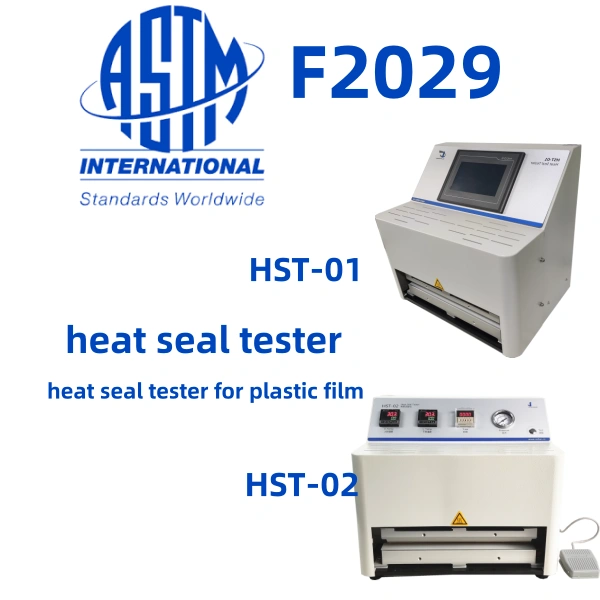
Cell Instruments provides two laboratory heat seal tester models for ASTM F2029 applications:
| Μοντέλο | Operation |
|---|---|
| HST-01Heat Seal Tester | Touchscreen |
| HST-02Heat Seal Tester | Manual Button Control |
Both models share the same sealing performance, technical specifications, sealing jaws, temperature control accuracy, and compliance with ASTM F2029.
What is ASTM F2029?
ASTM F2029 is the standard test method for producing laboratory heat seals that can later be evaluated for seal strength and package performance. Rather than measuring seal strength directly, the standard specifies a controlled method for creating consistent heat seals using predetermined sealing conditions.
The seals produced according to ASTM F2029 are commonly evaluated using seal strength standards such as ASTM F88 to determine the mechanical performance of the sealed package.
The standard helps engineers:
- Determine optimum sealing temperature
- Evaluate sealing windows for packaging materials
- Compare different sealant formulations
- Verify production sealing parameters
- Support packaging material qualification
- Improve process repeatability
For packaging manufacturers, ASTM F2029 serves as the foundation for developing reliable sealing processes before full-scale production begins.
Why Test Heat Seal Strength of Plastic Films?
Το αντοχή στη θερμοσφράγιση των πλαστικών μεμβρανών directly affects package integrity throughout manufacturing, transportation, storage, and consumer use. Poor heat seals may result in leakage, contamination, reduced shelf life, or product recalls.
Laboratory heat sealing provides valuable information before production by identifying the combination of:
- Sealing temperature
- Sealing pressure
- Dwell time
that produces the strongest and most consistent seals.
Testing also helps manufacturers:
- Reduce production waste
- Improve packaging consistency
- Validate new packaging materials
- Compare multilayer film structures
- Optimize sealing equipment settings
- Meet customer quality requirements
Instead of relying on trial-and-error adjustments on production lines, engineers can establish scientifically validated sealing parameters in the laboratory.
How Does a Heat Seal Tester Work?
A laboratory heat seal tester simulates the sealing conditions found on commercial packaging machines while offering significantly greater precision and repeatability.
Η διαδικασία δοκιμών περιλαμβάνει γενικά:
Preheating
The upper and lower sealing jaws are heated to the specified temperature and maintained with high temperature stability.
Sample Positioning
The test specimen is placed evenly between the sealing jaws to ensure uniform contact.
Pressure Application
The instrument applies the preset pneumatic pressure to the sample.
Controlled Sealing
The programmed sealing temperature, pressure, and dwell time remain constant throughout the sealing cycle.
Sample Removal
After the preset sealing time expires, the sealing jaws automatically open and the sealed specimen is removed for further evaluation.
The resulting samples can then undergo seal strength testing, burst testing, leak testing, or visual inspection depending on the quality control requirements.
Key Parameters Controlled During ASTM F2029 Testing
Accurate ASTM F2029 testing depends on precise control of three primary variables.
| Παράμετρος | Λειτουργία | Σημασία |
|---|---|---|
| Θερμοκρασία | Controls melting of sealant layer | Determines seal initiation and sealing window |
| Pressure | Maintains intimate contact between layers | Ensures uniform seal formation |
| Dwell Time | Controls heating duration | Influences seal consistency and strength |
By varying one parameter while keeping the others constant, engineers can establish the optimal sealing window for a specific packaging material.
Τυπικές εφαρμογές
ASTM F2029 applies to numerous heat-sealable materials used throughout the packaging industry.
Στις τυπικές εφαρμογές περιλαμβάνονται:
- Εύκαμπτες μεμβράνες συσκευασίας
- Laminated packaging structures
- Μεμβράνες πολυαιθυλενίου
- Polypropylene films
- PET laminates
- Επικαλυμμένα φύλλα αλουμινίου
- Ιατρικές συσκευασίες
- Pharmaceutical pouches
- Συσκευασία τύπου ρετόρτας
- Vacuum packaging
- Modified atmosphere packaging (MAP)
- Σακουλάκια που στέκονται όρθια
- Sachets
- Coffee packaging
- Συσκευασίες κατεψυγμένων τροφίμων
These materials often require different sealing temperatures and pressures, making laboratory optimization essential.
HST-01 and HST-02 Heat Seal Tester Models
Cell Instruments offers two versions of its ASTM F2029 heat seal tester, allowing laboratories to select the operation style that best fits their workflow.
HST-01 – Touchscreen Model
The HST-01 features a modern touchscreen interface for convenient parameter setting and operation.
Τα πλεονεκτήματα περιλαμβάνουν:
- Touchscreen operation
- Digital parameter input
- Clear operating interface
- Fast recipe adjustment
- Suitable for laboratories requiring frequent testing
HST-02 – Button-Operated Model
The HST-02 provides traditional push-button operation while maintaining the same sealing performance.
Τα πλεονεκτήματα περιλαμβάνουν:
- Simple manual button control
- Easy operation
- Reliable laboratory performance
- Suitable for routine quality control
Aside from the operating interface, both models deliver identical sealing capabilities and technical performance.
Τεχνικές προδιαγραφές
| Προδιαγραφές | Τιμή |
|---|---|
| Sealing Temperature | Ambient to 300°C |
| Temperature Accuracy | ±0,2 °C |
| Χρόνος σφράγισης | 0.1–9999 s |
| Πίεση σφράγισης | 0.15–0.7 MPa |
| Seal Jaw Size | 330 × 10 mm |
| Air Supply | 0.7 MPa |
| Air Connection | Φ6 mm PU Hose |
| Τροφοδοσία ρεύματος | AC 220 V, 50 Hz |
Benefits of ASTM F2029 Laboratory Testing
Using an ASTM F2029 compliant heat seal tester offers several advantages throughout product development and production.
Improved Product Development
Engineers can rapidly compare new packaging materials and sealant formulations without disrupting production.
Better Process Optimization
Laboratory testing identifies the most effective sealing conditions before production startup.
Higher Packaging Reliability
Consistent heat seals reduce leakage, contamination, and transportation damage.
Reduced Manufacturing Costs
Optimized sealing parameters minimize rejected products, material waste, and downtime.
Regulatory Confidence
ASTM F2029 testing supports documented quality control procedures required by many regulated industries.
Related Testing Standards
Although ASTM F2029 defines laboratory heat sealing procedures, complete package evaluation often includes additional testing standards.
| Πρότυπο | Σκοπός |
|---|---|
| ASTM F2029 | Laboratory heat sealing procedure |
| ASTM F88 | Δοκιμή αντοχής στεγανοποίησης |
| JIS Z 0238 | Heat seal testing of flexible packaging |
| YBB 001220 | Heat sealing requirements for pharmaceutical packaging |
| ASTM D3078 | Package leak testing |
| ASTM F1140 | Internal pressurization testing |
Together, these methods provide comprehensive evaluation of package sealing performance.
Γιατί να επιλέξετε το Cell Instruments;
Cell Instruments specializes in laboratory testing solutions for flexible packaging, medical packaging, pharmaceutical packaging, paper packaging, and polymer materials.
Beyond standard instruments, we provide:
- Εξατομικευμένα εξαρτήματα
- Multi-station testing systems
- Application-specific testing solutions
- Technical support for packaging development
- Assistance with ASTM-compliant testing methods
Whether selecting the touchscreen HST-01 or the button-operated HST-02, laboratories receive a reliable ASTM F2029 solution capable of producing consistent laboratory heat seals for subsequent performance evaluation.