
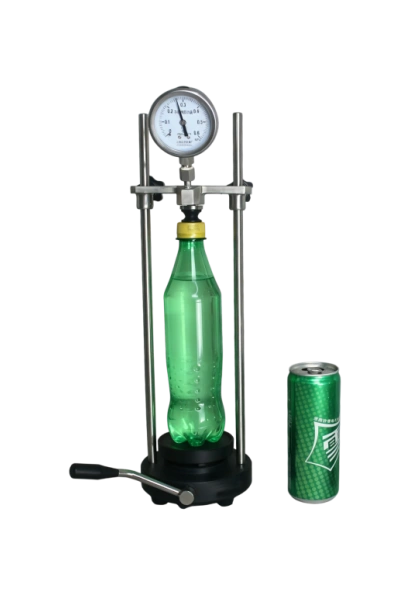
Carbonation quality directly influences beverage taste, mouthfeel, product stability, and consumer acceptance. The carbon dioxide volume tester provides a practical solution for measuring dissolved CO₂ levels in bottled and canned beverages by analyzing internal pressure and sample temperature. The CLRT-03 Carbon Dioxide Volume Tester is designed for beverage laboratories, breweries, and quality control departments that require reliable carbonation data during product development, production inspection, and quality verification.
Unlike methods that rely on visual evaluation or indirect estimation, the CLRT-03 determines carbonation levels through a controlled measurement process. After the beverage container is punctured, the instrument captures pressure changes and combines them with temperature data to calculate CO₂ content using standard carbonation tables or calculation methods. This pressure-temperature measurement approach enables consistent evaluation of carbonated drinks, beer, and other CO₂-containing beverages.
With compatibility for different bottle and can formats, the CLRT-03 supports routine carbonation levels testing in beverage container applications where accuracy, repeatability, and simple operation are essential.
What Is a Carbon Dioxide Volume Tester?
A carbon dioxide volume tester is a specialized beverage testing instrument used to determine the amount of dissolved carbon dioxide contained in sealed beverage packages. During production, carbonation must remain within a defined range because excessive or insufficient CO₂ can affect product performance.
For carbonated beverages, CO₂ contributes to:
- Refreshing taste and sensory characteristics
- Foaming behavior and serving quality
- Product differentiation between beverage types
- Package pressure control and storage stability
In breweries and beverage manufacturing facilities, carbonation measurement is an important quality control step. The CLRT-03 Carbonation Tester allows operators to evaluate carbonation conditions without complicated preparation procedures.
The instrument works by measuring two key parameters:
| Measurement Parameter | Cél |
|---|---|
| Internal Pressure | Determines the pressure generated by dissolved CO₂ inside the container |
| Beverage Temperature | Provides correction data because CO₂ solubility changes with temperature |
| CO₂ Content | Calculated from pressure-temperature relationship |
This measurement principle is widely applied in beverage laboratories following established carbonation analysis methods.
Testing Principle of Beverage Carbonation Measurement
Pressure and Temperature Correlation Method
The carbonation measurement principle is based on the relationship between dissolved CO₂ concentration, container pressure, and beverage temperature.
When a sealed beverage container reaches equilibrium, the pressure inside the package represents the amount of carbon dioxide released into the headspace. Since CO₂ solubility varies depending on temperature, accurate temperature measurement is necessary to determine the actual carbonation level.
The CLRT-03 combines:
- Precision pressure measurement
- High-accuracy temperature measurement
- Standard carbonation reference data
to calculate the dissolved CO₂ content.
This method is commonly used for beer and soft drink analysis because it provides direct measurement results from the original sealed package.
Carbonation Levels Testing in Beverage Container Procedure
The CLRT-03 follows a straightforward mechanical testing workflow suitable for daily laboratory operations.
Minták előkészítése és behelyezése
The beverage container is securely positioned on the tester platform. The instrument design accommodates various bottle and can sizes, allowing users to perform measurements without transferring samples into another container.
Container Piercing
The integrated piercing assembly penetrates the bottle or can closure area while maintaining a controlled connection between the sample container and measurement system.
Pressure Stabilization
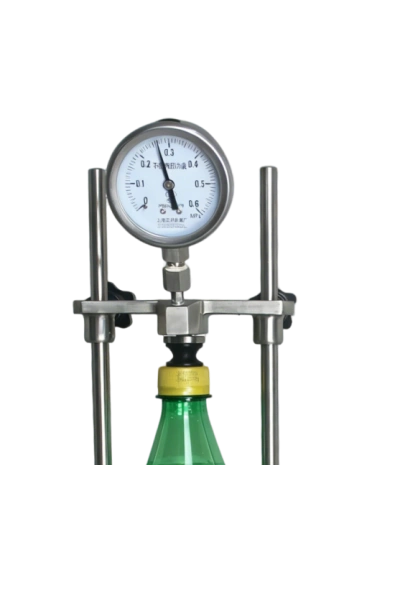
After piercing, the internal gas pressure reaches equilibrium. The operator reads the pressure value through the precision pressure gauge.
Temperature Measurement
The built-in bimetal thermometer measures beverage temperature. This value is required because carbonation results depend on temperature conditions.
CO₂ Content Calculation
The measured pressure and temperature values are compared with standard carbonation tables or calculation formulas to determine the final dissolved CO₂ content.
This testing method provides a practical approach for routine beverage quality inspection.
ASBC Beer-13 Carbonation Testing Method
A ASBC beer-13 method is widely recognized in brewing laboratories for carbonation measurement of beer products. It establishes a pressure and temperature-based approach for determining dissolved carbon dioxide content.
The CLRT-03 Carbon Dioxide Volume Tester supports testing practices based on ASBC carbonation analysis principles. By combining accurate pressure readings with temperature compensation, the instrument helps breweries verify carbonation consistency between production batches.
A tipikus alkalmazások közé tartoznak:
- Lager and ale carbonation verification
- Brewery quality control testing
- New product development
- Packaging line inspection
For breweries producing different beverage styles, maintaining consistent CO₂ levels is important for achieving expected flavor profiles and customer experience.
Key Features of the CLRT-03 Carbon Dioxide Volume Tester
1. High-Accuracy Pressure and Temperature Measurement
Reliable carbonation results depend on precise measurement of both pressure and temperature. The CLRT-03 integrates:
- Precision pressure gauge for internal package pressure measurement
- High-resolution thermometer for beverage temperature monitoring
- Stable mechanical structure for repeatable testing
The combination of these measurement components improves confidence in carbonation analysis results.
2. Compatible with Bottled and Canned Beverages
Different beverage manufacturers use various package formats. The CLRT-03 is designed to handle:
- Glass bottles
- PET beverage bottles
- Aluminum cans
- Different container heights with optional configurations
This flexibility makes the instrument suitable for beverage plants, breweries, and third-party testing laboratories.
3. Simple Operation for Routine Quality Control
The manual testing process reduces operator complexity. Users can complete carbonation evaluation through a clear sequence:
- Secure sample
- Pierce container
- Read pressure
- Measure temperature
- Calculate CO₂ content
The straightforward workflow minimizes training requirements and supports frequent quality checks.
4. Durable Mechanical Design
The CLRT-03 features a robust construction suitable for laboratory environments and continuous testing operations.
Előnyök:
- Long service life
- Low maintenance requirements
- Stable measurement performance
- Reliable operation in production quality control environments
Műszaki adatok
| Paraméter | Műszaki adatok |
|---|---|
| Test Item | Carbon Dioxide (CO₂) Content |
| CO₂ Measurement Range | 0 – 4.00 % v/v |
| Pressure Measurement Range | 0 – 0.6 MPa |
| Pressure Resolution | 0.01 MPa |
| Temperature Measurement Range | 0 – 50°C |
| Temperature Resolution | 0.1°C |
| Maximum Bottle Height | ≤330 mm / ≤410 mm (depending on model) |
Applications of Carbonation Analyzer in Beverage Quality Control
A Carbon Dioxide Volume Tester plays an important role in monitoring beverage consistency throughout production and product development.
1. Breweries
Breweries use carbonation testing to confirm that beer products achieve target CO₂ levels before packaging and distribution.
Testing helps evaluate:
- Carbonation consistency between batches
- Product characteristics after fermentation
- Packaging performance
2. Soft Drink Manufacturers
Carbonated soft drinks require controlled carbonation levels to maintain taste and consumer expectations.
The CLRT-03 supports quality checks for:
- Carbonated water
- Soda beverages
- Flavored carbonated drinks
3. Beverage Research and Development
During formulation development, engineers can use carbonation measurement data to optimize recipes, packaging conditions, and storage performance.
Benefits of Carbonation Testing for Beverage Manufacturers
Regular carbonation testing provides measurable advantages:
1. Improved Product Consistency
Manufacturers can maintain stable CO₂ levels across different production batches.
2. Better Quality Control
Laboratories can identify carbonation deviations before products reach the market.
3. Reduced Production Risk
Early detection of carbonation problems helps prevent package performance issues.
4. Supporting Customer Satisfaction
Consistent carbonation contributes to predictable taste and drinking experience.
Related Standards for Carbon Dioxide Volume Measurement
The CLRT-03 Carbonation Tester supports carbonation testing methods referenced in beverage analysis standards, including:
| Standard | Alkalmazás |
|---|---|
| ASBC Beer-13 | Beer carbonation measurement principles |
| GB/T 4928-2001 | Beer analysis methods |
| GB/T 10792-1995 | Carbonated beverage testing |
These standards provide guidance for evaluating CO₂ content through pressure and temperature measurement methods.
Related Product
| Related Product | Leírás |
|---|---|
| CLRT-01 Carbonation Tester | An automated carbonation testing solution with automatic piercing, agitation, and CO₂ volume calculation for beverage manufacturers requiring efficient and repeatable quality control. |
| CLRT-02 Carbonation Tester Manual | A manual carbonation measurement instrument designed for laboratories and small-scale beverage testing with reliable pressure and temperature analysis. |
Why Choose CLRT-03 Carbon Dioxide Volume Tester?
For beverage manufacturers and laboratories, carbonation testing requires more than simply measuring pressure. Accurate results depend on controlled measurement conditions, proper temperature compensation, and reliable instrument performance.
The CLRT-03 Carbon Dioxide Volume Tester combines practical operation with precise measurement capability, making it suitable for daily beverage quality control. Its compatibility with different containers, support for recognized carbonation methods, and durable construction make it an effective choice for breweries, beverage producers, and testing organizations.
Következtetés
Accurate carbonation measurement helps beverage manufacturers maintain product consistency, optimize quality control, and verify compliance with industry testing practices. The CLRT-03 Carbon Dioxide Volume Tester provides a reliable solution for evaluating CO₂ content in beer, soft drinks, and carbonated beverages. Contact Cell Instruments to learn more about beverage testing equipment, customized fixtures, and professional testing solutions designed for your quality control requirements.


