
Comprendere la norma ASTM D2732 nelle prove sui film plastici
ASTM D2732 definisce un approccio standardizzato per valutare il ritiro termico lineare incontrollato di pellicole e fogli di plastica. Questo metodo si concentra su materiali con uno spessore di 0,76 mm o meno, rendendolo particolarmente indicato per imballaggi flessibili, pellicole mediche e applicazioni industriali con film termoretraibili.
Durante la produzione della pellicola, processi quali l’estrusione o lo stiramento introducono tensioni interne. Quando viene applicato calore, queste tensioni si allentano, provocando il restringimento del materiale. La norma ASTM D2732 quantifica questo comportamento, aiutando gli ingegneri e i professionisti del controllo qualità a prevedere le prestazioni in condizioni termiche.
La norma non tiene conto del restringimento causato dalla perdita di solvente, garantendo così che i risultati riflettano esclusivamente gli effetti termici.
Metodo di prova del ritiro: principi e rilevanza industriale
Il metodo di prova del ritiro La norma ASTM D2732 valuta l'entità della contrazione di una pellicola quando esposta a temperature controllate. Ciò fornisce informazioni fondamentali su:
- Stabilità del materiale durante l'esposizione al calore
- Integrità della confezione durante il trattamento termico
- Coerenza tra i lotti di produzione
La temperatura gioca un ruolo determinante. Il restringimento è spesso correlato a:
- Orientamento di lavorazione (direzione della macchina vs direzione trasversale)
- Struttura e cristallinità dei polimeri
- Punti di transizione di fase nelle resine di base
Effettuando test a diverse temperature, gli utenti possono stabilire un curva del profilo di restringimento, che è fondamentale per la progettazione dei prodotti e l'ottimizzazione dei processi.
Procedura di prova di restringimento senza pellicola: approccio passo dopo passo
Il Procedura di prova di termoretrazione senza pellicola garantisce che il restringimento avvenga senza vincoli esterni, consentendo una misurazione accurata del comportamento intrinseco del materiale.
I passaggi principali sono i seguenti:
- Preparazione del campione
Tagliare i campioni a 100 mm × 100 mm. Utilizzare almeno due campioni per ogni punto di temperatura. - Marcatura e orientamento
Identificare la direzione della macchina (MD) e la direzione trasversale (TD) per tenere conto del restringimento direzionale. - Inserimento nel supporto termoretraibile gratuito
Assicurarsi che il campione rimanga completamente libero da qualsiasi vincolo, impedendone al contempo che galleggi nel mezzo di riscaldamento. - Registrazione della temperatura
Misurare e annotare la temperatura dell'acqua prima dell'immersione. - Processo di immersione
Immergere il campione per circa 10 secondi oppure fino al raggiungimento dell'equilibrio termico.
Evitare l'esposizione al preriscaldamento, poiché potrebbe causare errori. - Fase di raffreddamento
Trasferire immediatamente in un mezzo a temperatura ambiente per la stabilizzazione. - Misurazione
Una volta raffreddato, misurare le dimensioni finali sia nella direzione MD che in quella TD.
Importante: Evitare di allungare o deformare il campione durante la manipolazione.
Calcolo del restringimento e interpretazione dei dati
La percentuale di restringimento si calcola come segue:Riduzione (%) = L0L0−Lf×100
Riduzione (%) = L0L0−Lf×100
Dove:
- L₀ = Lunghezza iniziale (in genere 100 mm)
- L_f = Lunghezza finale dopo il restringimento
Suggerimenti per l'interpretazione:
- Valori più elevati indicano un maggiore rilascio di tensioni interne
- Le differenze tra MD e TD evidenziano effetti di orientamento
- I test multitemperatura aiutano a definire le finestre di lavorazione
Apparecchio per la prova di ritiro termico: selezione e ottimizzazione delle apparecchiature
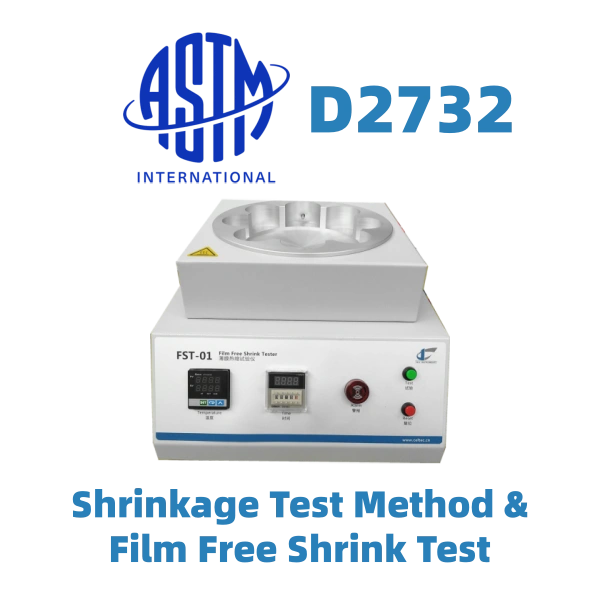
A apparecchio per la misurazione del ritiro termico è fondamentale per l'esecuzione della norma ASTM D2732 con ripetibilità e precisione. I sistemi avanzati garantiscono:
- Controllo stabile della temperatura
- Distribuzione uniforme del calore
- Tempi precisi e condizioni di immersione
Il FST-01 Tester per film termoretraibili senza pellicola Il prodotto di Cell Instruments è stato progettato appositamente per questo standard. Offre:
- Precisione della temperatura di ±0,3 °C, garantendo risultati affidabili
- Riscaldamento uniforme del fluido, eliminando il surriscaldamento localizzato
- Dispositivi di fissaggio a contrazione libera, mantenendo condizioni senza restrizioni
- Controllo automatico dei tempi, migliorando la ripetibilità
Questa apparecchiatura consente ai laboratori di simulare condizioni reali di restringimento e di verificare le prestazioni del film prima della sua introduzione in produzione.
Applicazioni pratiche delle prove secondo la norma ASTM D2732
La norma ASTM D2732 riveste un ruolo fondamentale in tutti i settori in cui il comportamento di restringimento termico influisce sulle prestazioni:
- Imballaggi flessibili: Garantisce che le pellicole si restringano in modo uniforme senza deformazioni
- Imballaggi per il settore medico e farmaceutico: Mantiene l'integrità della barriera sterile
- Guaine e tubi termorestringenti: Assicura una vestibilità ottimale e un buon isolamento
- Film industriali: Garantisce la stabilità del carico durante l'avvolgimento dei pallet
I test consentono ai produttori di adeguare le proprietà dei materiali alle esigenze di utilizzo finale, riducendo i difetti e migliorando l'affidabilità dei prodotti.
Migliorare il controllo qualità con la norma ASTM D2732
L'applicazione coerente della norma ASTM D2732 consente di migliorare:
- Convalida dei processi durante la produzione del film
- Garanzia di qualità dei fornitori
- Analisi dei guasti nei difetti di imballaggio
- Conformità normativa nei settori sensibili
Integrando questo test nei flussi di lavoro di controllo qualità di routine, le aziende ottengono controllo basato sui dati delle prestazioni di restringimento, con ripercussioni dirette sulla qualità del prodotto e sulla soddisfazione dei clienti.
Domande frequenti
1. Quali materiali possono essere sottoposti a prova secondo la norma ASTM D2732?
Si applica a pellicole e fogli di plastica con spessore fino a 0,76 mm, compresi PE, PET, PVC e laminati multistrato.
2. Perché è importante il ritiro incontrollato?
Riflette la risposta naturale del materiale al calore in assenza di forze esterne, fornendo dati precisi sulle prestazioni.
3. Per quanto tempo devono rimanere immersi i campioni?
Di norma 10 secondi, ma nel caso di materiali più spessi o nuovi potrebbe essere necessaria una verifica per garantire il completo restringimento.
4. Qual è la differenza tra il restringimento MD e quello TD?
MD indica la direzione della macchina, mentre TD indica la direzione trasversale. Le differenze evidenziano gli effetti dell'orientamento durante la lavorazione.
5. Può ASTM D2732 prevedere le prestazioni effettive degli imballaggi?
Sì, se abbinato a test multitemperatura, simula fedelmente le condizioni termiche reali.