
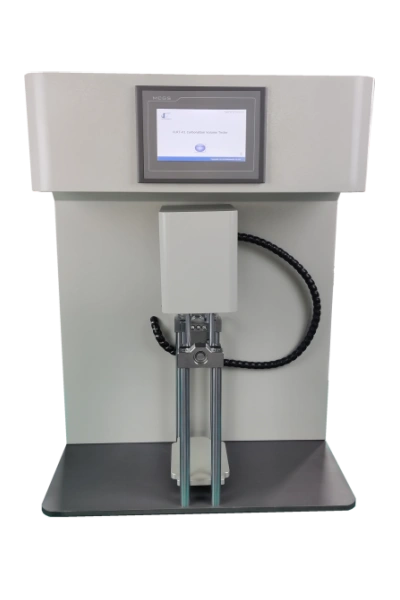
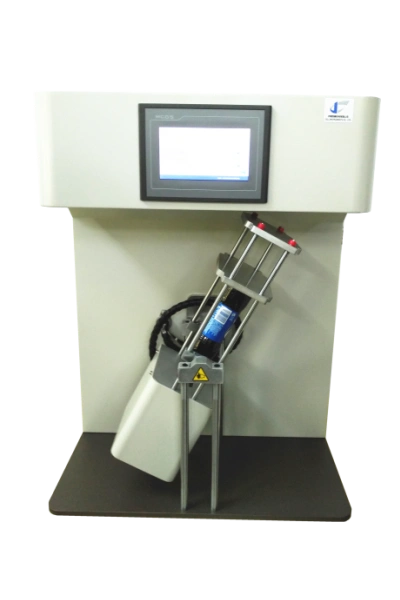
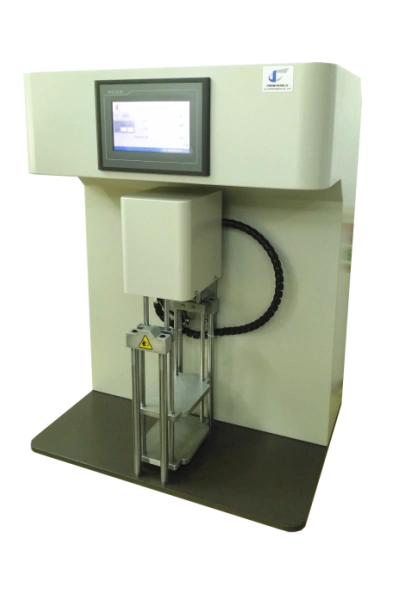
Carbonation quality directly influences beverage taste, mouthfeel, shelf stability, and consumer experience. The Automatic Beverage Carbonation Tester provides beverage manufacturers and quality laboratories with an efficient solution for measuring carbonation levels and evaluating CO₂ loss from beverage containers. Designed for carbonated soft drinks, beer, sparkling water, and other carbonated beverages, this automated system delivers accurate pressure and temperature measurement while reducing operator error during testing. Based on the ASTM F1115 test method, the instrument supports reliable automatic carbon dioxide loss testing for beverage container applications, helping manufacturers maintain consistent product quality throughout production and storage.
What Is an Automatic Beverage Carbonation Tester?
An Automatic Beverage Carbonation Tester is a specialized laboratory instrument used to determine the carbonation level of packaged beverages by measuring dissolved carbon dioxide (CO₂) content through pressure and temperature analysis.
Carbonation measurement is essential because CO₂ concentration affects:
- Beverage flavor and sensory characteristics
- Product freshness and consumer acceptance
- Packaging performance and shelf life
- Production consistency and quality control
Traditional carbonation testing methods often require manual piercing, shaking, pressure reading, and calculation, which can introduce variations between operators. An automated carbonation tester integrates sample preparation, pressure stabilization, agitation, data collection, and CO₂ volume calculation into a controlled testing workflow.
The CLRT-01 Carbonation Tester from Cell Instruments is developed to provide repeatable carbonation analysis for beverage manufacturers, laboratories, and research facilities requiring dependable carbonation testing performance.
Why Carbonation Testing Is Important for Beverage Quality Control
Carbon dioxide plays an important role in carbonated beverage performance. Insufficient carbonation can result in a flat taste, while excessive carbonation may create packaging stress, foaming issues, or inconsistent consumer experiences.
Niezawodny carbonation testing method for beverage container evaluation helps manufacturers identify:
- CO₂ retention problems during storage and transportation
- Packaging sealing or barrier performance issues
- Production process variations
- Filling and carbonation process stability
For beverage companies, carbonation testing is not only a product quality measurement but also an important quality assurance procedure supporting regulatory compliance and brand consistency.
Do typowych zastosowań należą:
| Zastosowanie | Cel testu |
|---|---|
| Soft drinks | Verify carbonation level and product consistency |
| Beer | Monitor CO₂ content and packaging stability |
| Sparkling water | Ensure expected carbonation performance |
| Energy drinks | Maintain sensory quality |
| Craft beverages | Support product development and batch control |
Carbonation Testing Principle and Measurement Method
The working principle of an Automatic Beverage Carbonation Tester is based on the relationship between beverage temperature, internal container pressure, and dissolved CO₂ concentration.
During testing, the instrument measures:
- Container pressure
- Sample temperature
- CO₂ equilibrium condition
The carbonation value is calculated using established carbonation tables or formulas based on pressure-temperature relationships.
A typical test process includes:
- The beverage container is securely positioned in the tester.
- The cap or closure is automatically pierced using a controlled mechanism.
- The instrument releases pressure conditions to establish a stable measurement environment.
- The sample is agitated to release dissolved CO₂ evenly.
- Pressure and temperature sensors collect real-time data.
- The system calculates and displays carbonation results automatically.
This automated process improves repeatability compared with manual carbonation measurement methods.
ASTM F1115 – Beverage Container CO₂ Loss Testing
The ASTM F1115 – Standard Test Method for Determining the CO₂ Loss of Beverage Containers provides a standardized approach for evaluating carbon dioxide loss from beverage containers.
ASTM F1115 is commonly applied when manufacturers need to assess:
- CO₂ retention capability of beverage packaging
- Packaging closure performance
- Carbonation stability during storage
- Container design effectiveness
An Automatic Beverage Carbonation Tester designed for ASTM F1115 applications helps laboratories perform consistent measurements by controlling critical testing variables such as:
- Piercing operation
- Agitation conditions
- Pressure measurement accuracy
- Temperature monitoring
For beverage packaging engineers and quality professionals, automated ASTM F1115 testing provides reliable data for packaging optimization and production control.
Automatic Carbon Dioxide Loss Testing for Beverage Container Applications
The demand for automatic carbon dioxide loss testing for beverage container evaluation continues to increase as beverage manufacturers focus on improving packaging reliability and reducing product variation.
The CLRT-01 supports testing of various container formats, including:
- PET bottles
- Glass bottles
- Aluminum cans
- Customized beverage containers
The automated testing workflow helps laboratories evaluate CO₂ loss without relying heavily on manual operations. This is especially valuable for high-volume production environments where testing efficiency and repeatability are critical.
Automated Testing Workflow of CLRT-01 Carbonation Tester
The CLRT-01 improves carbonation analysis through a fully automated testing sequence.
Automatic Cap Piercing
The instrument uses a precision-controlled piercing mechanism to penetrate the container closure. The default piercing speed is 5 mm/s, reducing sudden pressure changes and improving testing consistency.
Pressure Stabilization
After piercing, the system controls pressure release through a dedicated venting process. This helps establish stable measurement conditions before carbonation analysis.
Servo-Controlled Agitation
Uniform agitation is essential because dissolved CO₂ must reach equilibrium before measurement. The CLRT-01 uses a servo-driven rotating mechanism with adjustable shaking parameters.
Default shaking time:
- 40 seconds
The shaking duration can be customized according to different beverage types and testing requirements.
Real-Time Data Acquisition
High-accuracy sensors continuously monitor:
- Pressure: resolution up to 0.01 kPa
- Temperature: resolution up to 0.1℃
The system automatically processes collected data and displays carbonation results.
Automatic CO₂ Volume Calculation
The tester calculates carbonation values using embedded carbonation reference data, eliminating manual calculations and reducing operator workload.
Key Features of Automatic Beverage Carbonation Tester
High Accuracy Measurement System
The CLRT-01 integrates industrial-grade pressure and temperature sensors to provide stable and repeatable measurement results.
Key performance advantages:
- Pressure resolution: 0.01 kPa
- Temperature resolution: 0.1℃
- Temperature range: 0–30℃
Intelligent Control Interface
The instrument features a PLC and HMI touchscreen system that allows operators to easily configure:
- Piercing speed
- Shaking parameters
- Czas trwania testu
- Measurement settings
The intuitive interface improves usability for both laboratory technicians and production quality teams.
Reliable Mechanical Structure
The servo motor-driven agitation system provides consistent movement during testing. The sealed testing structure helps prevent:
- CO₂ leakage
- Beverage leakage
- Measurement instability
Anti-corrosion materials improve durability when working with different beverage products.
Flexible Testing Capability
The system supports various beverage container designs and can be customized with additional fixtures according to customer requirements.
Optional functions include:
- Microprinter
- RS232 communication
- Data management software integration
Typical Carbonation Testing Procedure
A standard carbonation test using an Automatic Beverage Carbonation Tester generally follows these steps:
| Step | Działanie |
|---|---|
| 1 | Place beverage sample into the testing chamber |
| 2 | Secure the container position |
| 3 | Automatically pierce the closure |
| 4 | Stabilize internal pressure |
| 5 | Shake sample to release dissolved CO₂ |
| 6 | Measure pressure and temperature |
| 7 | Calculate carbonation value |
| 8 | Record and analyze results |
Compared with manual methods, automated testing provides improved efficiency and better repeatability between operators and laboratories.
Industries Using Automatic Beverage Carbonation Testers
Automatic carbonation testing equipment is widely used in:
- Beverage manufacturing companies
- Beer production facilities
- Carbonated water producers
- Food and beverage testing laboratories
- Packaging quality inspection organizations
- Research and development centers
- Universities and technical institutes
These industries rely on carbonation measurement to improve product quality, optimize packaging solutions, and verify manufacturing consistency.
Applicable Materials and Containers
The tester can be applied to various beverage packaging materials, including:
- PET bottles
- Glass bottles
- Aluminum cans
- Composite beverage containers
- Custom-designed packaging formats
Different container types may require customized fixtures or testing configurations to meet specific laboratory requirements.
Benefits of Automated Carbonation Testing
Using an Automatic Beverage Carbonation Tester provides several advantages:
Improved Testing Accuracy
Automated control minimizes human operation differences and improves measurement reliability.
Higher Laboratory Efficiency
Automatic piercing, agitation, and calculation reduce testing time.
Better Quality Control
Manufacturers can identify carbonation variations earlier and improve production stability.
Supporting Packaging Development
Reliable CO₂ retention data helps engineers optimize container design and closure systems.
Data Consistency for Compliance
Standardized testing procedures support internal quality systems and ASTM-based evaluation.
Technical Specifications of CLRT-01 Carbonation Tester
| Parametr | Specyfikacja |
|---|---|
| Zakres testu | 0–1 MPa |
| Pressure Resolution | 0.01 kPa |
| Zakres temperatur | 0–30℃ |
| Temperature Resolution | 0.1℃ |
| Piercing Speed | 5 mm/s (customizable) |
| Shaking Speed | Adjustable |
| Shaking Time | 40 s (customizable) |
| Maximum Sample Height | ≤350 mm (customizable) |
Choosing the Right Carbonation Testing Equipment
When selecting an Automatic Beverage Carbonation Tester, laboratories should consider:
- Required testing standards
- Container types and sizes
- Measurement accuracy requirements
- Poziom automatyzacji
- Data management needs
- Future testing expansion requirements
A professional testing equipment supplier can provide customized fixtures, software integration, and specialized solutions for unique beverage packaging applications.
Cell Instruments combines testing technology expertise with customized engineering capability to support beverage manufacturers, laboratories, and research organizations worldwide.
Wnioski
Accurate carbonation measurement helps beverage manufacturers maintain product quality, improve packaging performance, and ensure consistent consumer experiences. Cell Instruments provides advanced carbonation testing equipment with automated operation, reliable measurement technology, and customizable solutions for different beverage container applications. Contact our technical team to learn more about Automatic Beverage Carbonation Tester solutions and how our testing systems can support your quality control, R&D, and production requirements.


