ASTM F392 Flex Durability Test for Flexible Barrier Materials
Flexible packaging materials experience repeated bending, twisting, folding, and compression throughout manufacturing, transportation, storage, and consumer use. ASTM F392 establishes a standardized procedure for evaluating how well these materials resist damage caused by repeated flexing. The test, commonly known as the gelbo test method, measures a material’s flex durability by simulating mechanical fatigue that can generate pinholes, cracks, or delamination in barrier structures. Therefore, the GFT Gelbo Flex Tester plays a crucial role at various stages, helping manufacturers avoid unnecessary risks.
For packaging engineers and quality laboratories, ASTM F392 provides valuable information that cannot be obtained from tensile, seal strength, or puncture testing alone. It reveals whether a flexible barrier can continue protecting sensitive products after repeated mechanical deformation, making it an essential evaluation method for high-performance packaging.
Why Flex Durability Matters in Flexible Packaging
Many flexible materials possess excellent barrier performance before use but experience significant deterioration after repeated handling. During logistics and daily use, packages are continuously folded, squeezed, twisted, and bent. These actions may produce microscopic defects that gradually reduce barrier performance.
Poor flex durability may result in:
- Increased oxygen transmission
- Higher moisture permeability
- Loss of aroma retention
- Reduced sterile barrier integrity
- Shortened product shelf life
- Increased product waste
A standardized flex durability test enables manufacturers to identify potential performance issues during product development instead of after products enter the market.
Understanding the ASTM F392 Gelbo Test Method
The gelbo test method combines torsional movement with linear compression to reproduce the complex stresses experienced by flexible packaging.
Rather than applying only one type of deformation, ASTM F392 subjects the specimen to simultaneous twisting and compression, generating a realistic fatigue condition that closely resembles actual package handling.
The standard specifies controlled movement parameters, including:
| Test Parameter | Typical Requirement |
|---|---|
| Twisting Motion | 440° over 90 mm (or optional 400° over 80 mm) |
| Compression Stroke | 65 mm linear compression |
| Test Frequency | 45 cycles per minute |
| Sample Size | 280 mm × 200 mm |
| Test Modes | Multiple programmed cycle selections |
This combination of motions accelerates fatigue damage while maintaining excellent repeatability between laboratories.
How the Flex Durability Test Is Performed
The ASTM F392 procedure is straightforward but highly controlled.
Sample Preparation
Test specimens are cut to the required dimensions without wrinkles or visible defects. Multiple specimens are typically prepared to improve statistical confidence.
Mounting the Specimen
Each sample is securely fixed around dedicated mandrels inside the tester. Proper alignment prevents abnormal stresses that could influence results.
Repeated Flexing
The tester automatically performs synchronized twisting and compression according to the selected program.
Common operating modes include:
- Long-duration endurance testing
- Medium-cycle production verification
- Short-cycle screening tests
- Complete flex evaluation
- Partial flex evaluation
The programmable cycle options allow laboratories to select appropriate testing intensity for various product requirements.
Post-Test Evaluation
After flexing, specimens are inspected using one or more evaluation methods, including:
- Visual inspection for cracks
- Pinhole detection
- Oxygen transmission testing (OTR)
- Water vapor transmission testing (WVTR)
- Gas transmission rate (GTR)
- Additional barrier performance measurements
Comparing barrier performance before and after flexing provides valuable insight into material durability.
Materials Commonly Evaluated According to ASTM F392
ASTM F392 applies to numerous flexible barrier constructions, including:
- Polyethylene (PE) films
- Polypropylene (PP) films
- Polyester (PET) films
- Nylon films
- EVOH barrier films
- Aluminum foil laminates
- Metallized films
- Multi-layer coextruded films
- Adhesive laminated structures
- High-barrier composite materials
- Functional coating films
These materials often serve applications where maintaining barrier integrity is essential throughout product distribution.
Industries That Depend on ASTM F392 Testing
The flex durability test supports quality assurance across many industries where package integrity directly influences product performance.
Food Packaging
Flexible pouches for coffee, snacks, frozen foods, dairy products, and ready-to-eat meals require reliable barrier protection throughout transportation and consumer handling.
Medical Device Packaging
Sterile pouches and medical packaging materials must maintain barrier performance after shipping, handling, and storage. ASTM F392 helps verify resistance to mechanical fatigue.
Pharmaceutical Packaging
Barrier films protecting moisture-sensitive medicines benefit from flex testing to ensure long-term package performance.
Industrial Packaging
Protective films used for chemicals, electronics, agricultural products, and specialty materials frequently undergo repeated mechanical stress during logistics.
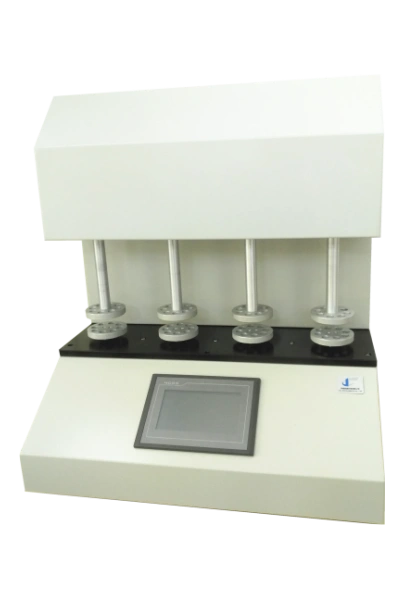
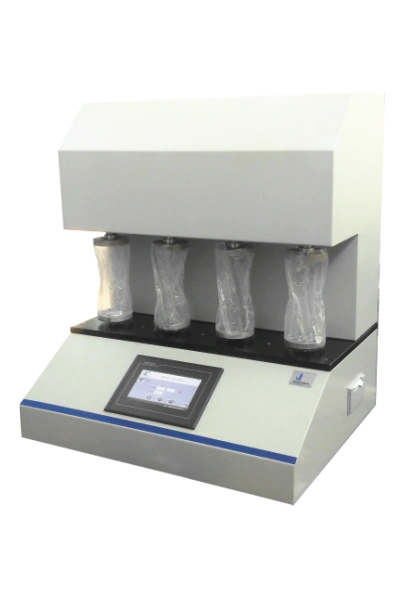
GFT Gelbo Flex Tester for ASTM F392
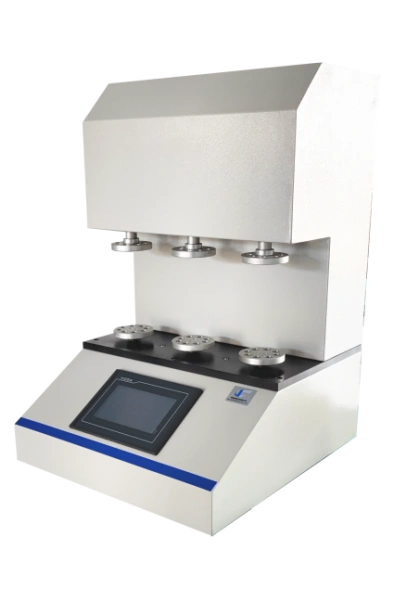
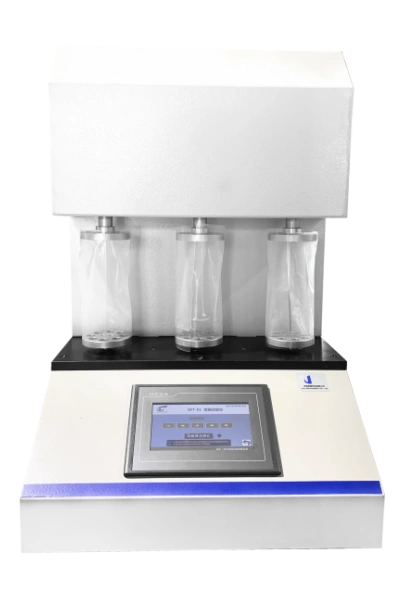
The GFT Gelbo Flex Tester from Cell Instruments is specifically engineered to automate the ASTM F392 testing procedure while improving laboratory efficiency and repeatability.
Its programmable motion accurately reproduces the standardized twisting and compression sequence required by the gelbo test method, enabling consistent testing across multiple specimens.
Key capabilities include:
- PLC-based automatic control
- Intuitive touchscreen interface
- Three- or four-station configurations
- Five selectable testing programs
- Stable motion control for repeatable results
- Adjustable flex angle configurations
- Industrial-grade drive system for continuous operation
The multi-station design allows laboratories to evaluate several specimens simultaneously, increasing productivity without sacrificing accuracy.
Technical Specifications
| Parameter | GFT-02 | GFT-01 |
|---|---|---|
| Flex Angle | 440° (90 mm) or 400° (80 mm) | 440° (90 mm) or 400° (80 mm) |
| Torque Capacity | 3.5 N·m | 2.5 N·m |
| Horizontal Stroke | 155 mm or 80 mm | 155 mm or 80 mm |
| Test Stations | 3 | 4 |
| Sample Size | 280 × 200 mm | 280 × 200 mm |
| Power Supply | 110–220 V | 110–220 V |
Benefits of Using ASTM F392 in Quality Control
Integrating ASTM F392 into a packaging validation program offers several practical advantages:
- Detects flex-induced barrier failure before commercialization
- Supports material comparison during product development
- Improves consistency between production batches
- Reduces packaging-related product complaints
- Assists supplier qualification
- Enhances confidence in package performance during transportation
- Supports compliance with customer quality requirements
Rather than relying solely on initial barrier measurements, manufacturers gain insight into how packaging performs after repeated mechanical stress.
ASTM F392 Compared with Other Packaging Tests
| Test Standard | Primary Evaluation | Typical Purpose |
|---|---|---|
| ASTM F392 | Flex durability | Resistance to repeated twisting and compression |
| ASTM F88 | Seal strength | Heat seal performance |
| ASTM D882 | Tensile properties | Tensile strength and elongation |
| ASTM D1709 | Impact resistance | Falling dart impact performance |
| ASTM D1894 | Coefficient of friction | Surface slip characteristics |
| ASTM F1921 | Hot tack strength | Seal strength immediately after sealing |
Each method evaluates a different mechanical property, making ASTM F392 an important complement to a complete packaging testing program.
Why Choose Cell Instruments
Cell Instruments has extensive experience in mechanical testing solutions for flexible packaging, medical packaging, pharmaceutical packaging, and advanced barrier materials.
Beyond standard laboratory instruments, we provide:
- Customized fixtures
- Multi-station automated systems
- Special testing configurations
- Integrated laboratory solutions
- Technical consultation for application-specific testing
Our testing systems are designed to deliver reliable, repeatable data while adapting to evolving product development and quality control requirements.
Reliable packaging requires more than excellent initial barrier properties—it must maintain performance after repeated handling and transportation. ASTM F392 testing provides valuable insight into long-term flex durability and package reliability. Cell Instruments offers the GFT Flex Durability Tester along with customized fixtures, automated testing configurations, and technical support tailored to your application. Whether you are developing new barrier materials or validating production quality, our testing solutions help you obtain accurate, repeatable results. Contact us to discuss the most suitable ASTM F392 testing system for your laboratory.