
Medición de la resistencia al impacto de las películas mediante el ensayo según la norma ASTM D1709
ASTM D1709 Es la norma internacionalmente reconocida para el ensayo de impacto con dardo, utilizada para determinar la resistencia al impacto de las películas plásticas mediante el método de caída libre del dardo. El ensayo mide el peso del dardo en caída libre necesario para provocar la rotura en el 50% de las muestras sometidas a ensayo, lo que proporciona un indicador fiable de la tenacidad, la resistencia a la perforación y la durabilidad frente al impacto de la película.
Los fabricantes de envases flexibles, films agrícolas, revestimientos industriales, envases médicos y envases para productos de consumo recurren a los ensayos según la norma ASTM D1709 para evaluar el comportamiento de los materiales en condiciones de impacto repentino. Al cuantificar la resistencia al impacto, los laboratorios pueden optimizar las estructuras de los films, comparar materiales, verificar la uniformidad de la producción y garantizar la calidad del producto antes de su lanzamiento al mercado.
¿Qué es la norma ASTM D1709?
ASTM D1709, Métodos de ensayo normalizados para determinar la resistencia al impacto de las láminas de plástico mediante el método del dardo en caída libre, establece los procedimientos para determinar la resistencia al impacto de las láminas de plástico mediante el lanzamiento de un dardo semiesférico desde una altura determinada.
El resultado del ensayo representa la masa del dardo que, estadísticamente, provoca el fallo en el 50% de las probetas en condiciones de ensayo controladas.
La norma incluye:
- Método de prueba A
- Método de prueba B
- Técnica de ensayo en escaleras
- Técnica alternativa de pruebas en grupo
Este método se utiliza ampliamente para el control de calidad, el desarrollo de productos, la comparación de materiales y la verificación de especificaciones.
Principio del ensayo según la norma ASTM D1709
El ensayo mide la energía de impacto necesaria para romper una muestra de película.
Se lanza un dardo hemisférico desde una altura determinada y este impacta contra una muestra de película sujeta entre abrazaderas. En función de si la muestra supera o no la prueba, se ajusta el peso del dardo según el procedimiento de ensayo seleccionado.
Tras múltiples caídas, el sistema calcula la masa del dardo correspondiente a una probabilidad de fallo de la probeta de 50%.
El valor resultante sirve como medida cuantitativa de la resistencia al impacto.
Método de ensayo A frente al método B de la norma ASTM D1709
| Parámetro | Método A | Método B |
|---|---|---|
| Diámetro del dardo | 38 mm | 50 mm |
| Altura de caída | 660 mm | 1520 mm |
| Rango de resistencia al impacto | Entre 50 g y 6 kg aproximadamente | Entre 300 g y 6 kg aproximadamente |
| Aplicaciones típicas | Láminas de embalaje generales | Películas de mayor impacto |
| Orientaciones sobre el incremento de peso | Aproximadamente 15% de peso de rotura | Aproximadamente entre 5 y 151 TP5T de peso de rotura |
Método A
El método A utiliza:
- Pinta hemisférica de 38 mm
- Altura de caída de 660 mm
Este método se utiliza habitualmente para:
- Láminas de polietileno
- Láminas de embalaje
- Films extensibles
- Láminas agrícolas
Método B
El método B utiliza:
- Punta hemisférica de 50 mm
- Altura de caída de 1520 mm
Esta configuración es adecuada para:
- Láminas de alta resistencia
- Revestimientos industriales
- Estructuras de plástico más gruesas
- Materiales de embalaje de alta resistencia
ASTM D1709: Método de ensayo para escaleras
La técnica de la escalera es el procedimiento más utilizado.
Procedimiento de ensayo
- Selecciona el método A o el método B.
- Mide el grosor de la muestra.
- Elige un peso inicial del dardo cercano al punto de fallo previsto.
- Sujeta la muestra con firmeza.
- Lanza el dardo.
- Anota si ha aprobado o suspendido.
- Ajustar el peso del dardo:
- Fracaso → bajar de peso
- Si no se produce ningún fallo → aumentar el peso
- Continúa con las pruebas hasta que se alcance el número requerido de fallos y de resultados sin fallo.
- Calcula el peso de fallo del 50%.
Ventajas
- Pruebas eficaces
- Menor consumo de muestra
- Alta fiabilidad estadística
- Excelente repetibilidad
Método alternativo de ensayo de caída de dardos
El procedimiento alternativo evalúa las muestras en grupos de diez.
Resumen del procedimiento
- Se someten a ensayo diez muestras con un solo peso de dardo.
- Se calcula el porcentaje de fallos.
- El peso del dardo se ajusta para las siguientes rondas.
- Las pruebas continúan hasta que se recopilen suficientes puntos de datos entre el fallo 0% y el 100%.
Este método se utiliza a menudo cuando los laboratorios necesitan una evaluación estadística más amplia del rendimiento de los materiales.
Requisitos para las muestras de ensayo
Para realizar ensayos fiables según la norma ASTM D1709:
Preparación de las muestras
- La película no debe presentar arrugas ni pliegues.
- Se debe evitar la contaminación superficial.
- Las muestras deben ser representativas del material de producción real.
- Se debe medir y anotar el espesor.
Tamaño recomendado de la muestra
- Más de 150 mm × 150 mm
Una preparación adecuada de las muestras mejora significativamente la repetibilidad y la reproducibilidad de los ensayos.
¿Por qué realizar un ensayo de impacto con dardos?
Las láminas de plástico suelen sufrir impactos durante:
- Operaciones de envasado
- Transporte y logística
- Almacenamiento
- Atención al consumidor
- Procesos de llenado automatizados
Una prueba de impacto con dardos ayuda a los fabricantes a comprender cómo se comporta una película cuando se ve sometida a fuerzas mecánicas repentinas.
Ventajas principales
- Evaluar la resistencia de la película
- Comparar diferentes formulaciones de resina
- Comprobar la uniformidad de la producción
- Optimizar estructuras de películas multicapa
- Reducir los problemas con los paquetes durante la distribución
- Apoyar el desarrollo de productos y la selección de materiales
Equipo de ensayo de impacto con dardo en caída según la norma ASTM D1709 de Cell Instruments
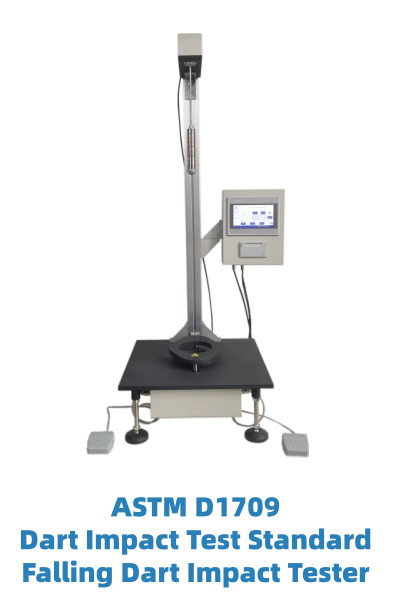
Cell Instruments ofrece un servicio profesional Máquina de ensayo de impacto con dardos diseñado para cumplir con la norma ASTM D1709 y para la realización de ensayos rutinarios de laboratorio.
Integración de tecnología inteligente
Control mediante PLC y manejo mediante pantalla táctil
- Arquitectura de los PLC industriales
- Pantalla táctil HMI de 7 pulgadas
- Manejo intuitivo
Cálculo automático de resultados
El sistema calcula automáticamente los valores de resistencia al impacto tras las pruebas de aprobación o rechazo, lo que reduce la carga de trabajo del operador y minimiza los errores de cálculo.
Lanzamiento electromagnético de dardos
- Suspensión estable del dardo
- Condiciones de liberación uniformes
- Mayor repetibilidad
Sujeción neumática de muestras
- Sujeción uniforme de las muestras
- Menor influencia del operador
- Mayor coherencia en las pruebas
Capacidad para utilizar dos métodos de ensayo
| Característica | Configuración |
|---|---|
| Método A | Estándar |
| Método B | Opcional |
| Cálculos automáticos | Sí |
| Sujeción neumática | Sí |
| Control mediante pantalla táctil | Sí |
Características de seguridad y productividad
- Funcionamiento mediante pedal
- Botón de activación de prueba
- Iluminación de observación
- Microimpresora opcional
- Integración de software opcional
Especificaciones técnicas
| Artículo | Especificaciones |
|---|---|
| Método de ensayo | Método A / Método B (opcional) |
| Alcance de la prueba | Método A: 50–2000 g |
| Método B: 300–2000 g | |
| Diámetro del dardo | Método A: 38 ± 1 mm |
| Método B: 50 ± 1 mm | |
| Altura de impacto | 660 mm / 1500 mm |
| Precisión | 0,1 g (0,1 J) |
| Sistema de sujeción | Neumático |
| Air Supply | 0,6 MPa |
| Tamaño de la muestra | >150 mm × 150 mm |
| Fuente de alimentación | 110-220 V CA, 50 Hz |
Cómo elegir el medidor de impacto de dardos adecuado
A la hora de seleccionar un sistema de ensayo conforme a la norma ASTM D1709, los laboratorios deben tener en cuenta lo siguiente:
- Cumplimiento de los requisitos de la norma ASTM D1709
- Compatibilidad con el método A y el método B
- Nivel de automatización
- Capacidades de gestión de datos
- Rendimiento de las pruebas
- Requisitos de calibración y mantenimiento
Un moderno equipo de ensayo de impacto con dardos contribuye a mejorar la eficiencia de los ensayos, al tiempo que garantiza resultados precisos y repetibles para aplicaciones de control de calidad e I+D.
ASTM D1709 sigue siendo una de las normas más importantes para evaluar la resistencia al impacto de las láminas de plástico. Mediante ensayos normalizados con dardos en caída libre, los fabricantes pueden cuantificar la tenacidad de las láminas, mejorar el rendimiento de los productos, reducir los fallos en los envases y mantener una calidad de producción constante. Ya sea para el control de calidad, el desarrollo de productos o la comparación de materiales, un equipo fiable de ensayo de impacto con dardos es una herramienta esencial para los laboratorios modernos de ensayo de películas.